Bhubaneswar: Rajo Majhi, a class VIII dropout tribal girl, now paints the future prospect of Saura art. What was considered to be beautification of outer walls of tribal hut has now become a commercial art pieces adding income to poor Rajo.
The girl who was eking out her life with a small income of Rs 1000 per month from tailoring is now earning Rs 20,000 per month. Rajo has become a professional painter. Her painting are now find place in prestigious art galleries.
For generations, members of the Saura tribe in Odisha have documented their rich legacy on the mud walls of their homes. Using simple materials such as rice paste, natural pigments and bamboo brushes, they painted intricate constellations of stick-like figure scenes of harvest, hunting, childbirth and ritual. These displays functioned as avivid dialogue with their ancestors, spirits and denizens of the natural world.
The time-intensive nature of the craft, the absence of structured markets, and limited access to materials and platforms meant artisans struggled to earn even subsistence incomes. Despite its richness, Saura art offered little economic security for its remaining artists, with many families forced to choose survival over heritage and opt for work as migrant labourers. What had once been a traditional practice for eons, now risked being reduced to memory. An art form rooted in dignity now stood on the cusp of disappearance, not because it lacked relevance, but because it lacked adequate support.
It was within this scenario that Project Adikala, launched in 2018 by Vedanta Aluminium, took shape.The company’s vision was deliberate and respectful: revival would only work if it happened within the community, by the community, and on their terms.
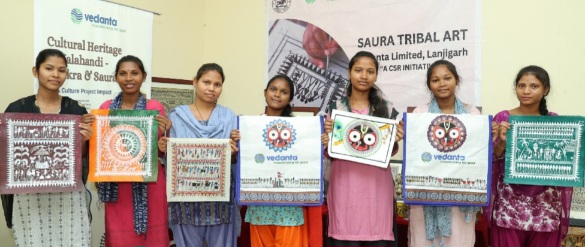
A dedicated Adikala Art Gallery was established in the region. Artisans were trained to adapt their traditional art from mud walls to canvas, paper and other modern materials, while preserving ancient techniques. Just as importantly, the project helped build direct market linkages, connecting Saura artists to institutional buyers, exhibitions and organised platforms.The result was something rare: economic upliftment without cultural compromise.
Project Adikala groomed Rajo Majhi from Chanalima village. Determined, Rajo walked five kilometres every day to attend training.The centre provided materials, infrastructure and access. Within months, Rajo was contributing to live commercial projects. Her income rose to nearly ₹20,000 a month. Her art travelled far beyond her village, finding homes in urban spaces and galleries.Today, Rajo mentors other young learners at the same training centre.Rajo is one of over 120 artisans across six village clusters who are part of the Adikala ecosystem today.
The company has adopted the role of an enabler, providing infrastructure, certified trainers, and market access through reputed platforms such as the Tribal Cooperative Marketing Development Federation of India Ltd. (TRIFED) and the Odisha Rural Development and Marketing Society (ORMAS), while protecting the tribe’s creative ownership.
As the Adikala brand continues to grow and mature, a long-term roadmap envisions the eventual transition of ownership to the tribal community itself. And so, the tribe paints on, with the promise of a brighter future shaped by its own hands.